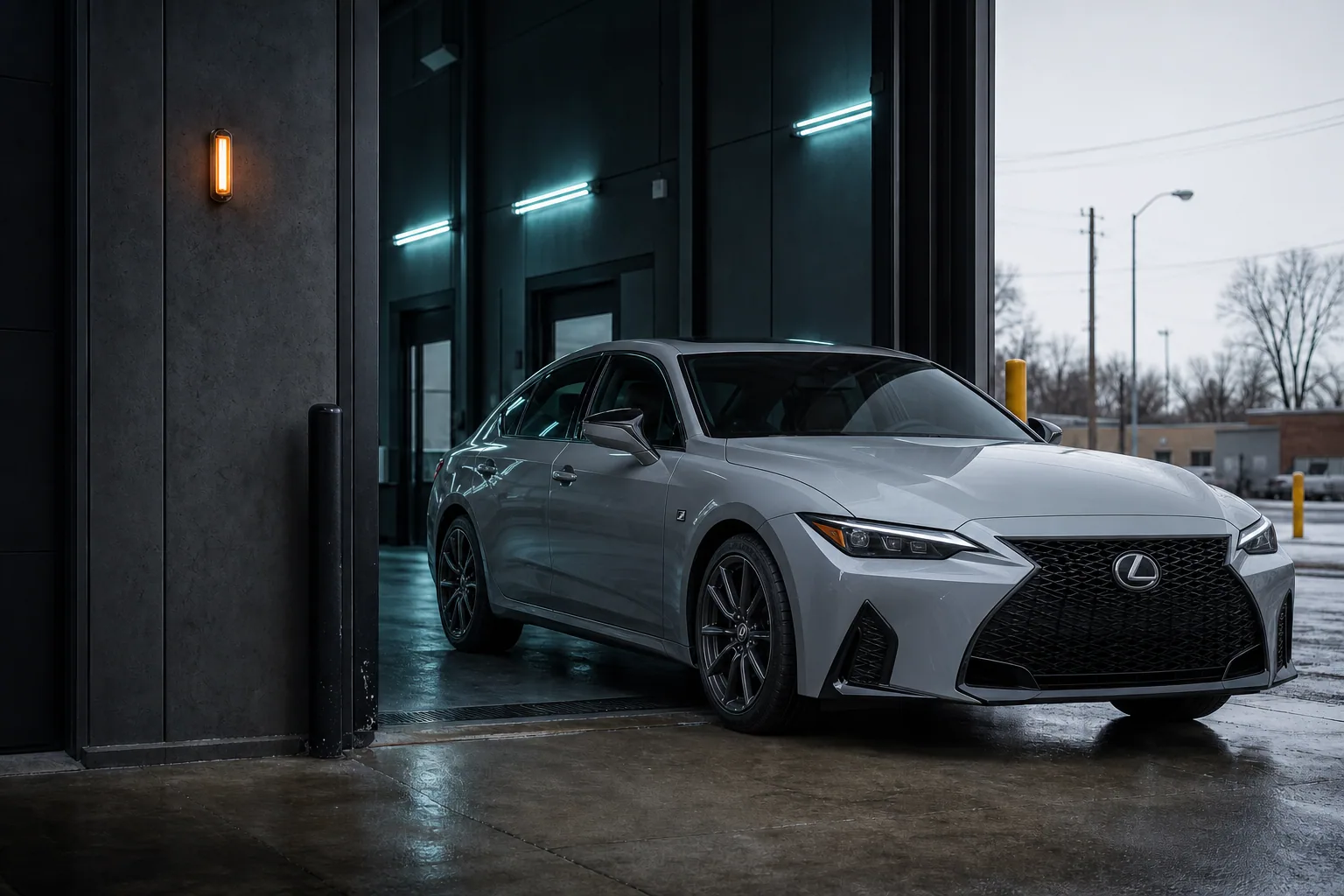
The cleanest way to compare paint protection film and ceramic coating is to stop treating them as rival versions of the same product. One is a physical film. The other is a liquid-applied surface treatment. The better choice depends on the problem in front of you.
Two layers, two different jobs
Paint protection film is selected by panel and exposure. Ceramic coating is selected by surface and maintenance goal. Paint correction may come before either one when the finish shows swirls, haze, or isolated defects.
Where paint protection film fits
Film makes the most sense when the concern is road debris against painted bodywork. A full-front PPF plan concentrates on the bumper, hood, front fenders, and mirror caps. A full-body plan extends that physical layer across the painted exterior.
Coverage still needs inspection and mapping. Panel geometry, trim, edges, existing paint condition, and the vehicle's expected use all affect the working plan.
Where ceramic coating fits
A ceramic coating plan starts with surface preparation. The coating supports water behavior and a more manageable wash routine, but it does not become a physical impact layer and it does not erase defects underneath.
If the concern is a rock meeting the hood, compare film. If the concern is water and grime meeting a prepared surface, compare coating.
Metro Detroit factors worth discussing
Daily drivers around Madison Heights, Royal Oak, Troy, and Birmingham can combine freeway speeds, tight city parking, construction debris, winter road film, and repeated wash cycles. That mix usually calls for a surface-by-surface conversation.
- Frequent I-75 or I-696 mileage may move front impact zones higher on the list.
- Outdoor parking and year-round driving can put more emphasis on the maintenance routine.
- Existing swirls or haze may make paint correction part of the preparation sequence.
- New delivery is still a reason to inspect, not a reason to skip inspection.
Build the decision in order
- Inspect the finish. Identify defects, contamination, and panel condition.
- Map physical exposure. Decide which painted panels face the road most often.
- Define maintenance goals. Discuss washing, parking, mileage, wheels, and glass.
- Sequence the work. Put correction, film, and coating in a clear order.
A recently delivered vehicle may benefit from a combined new vehicle protection plan. A commuter with a focused concern may only need to compare one film coverage area against a coating and care routine.